
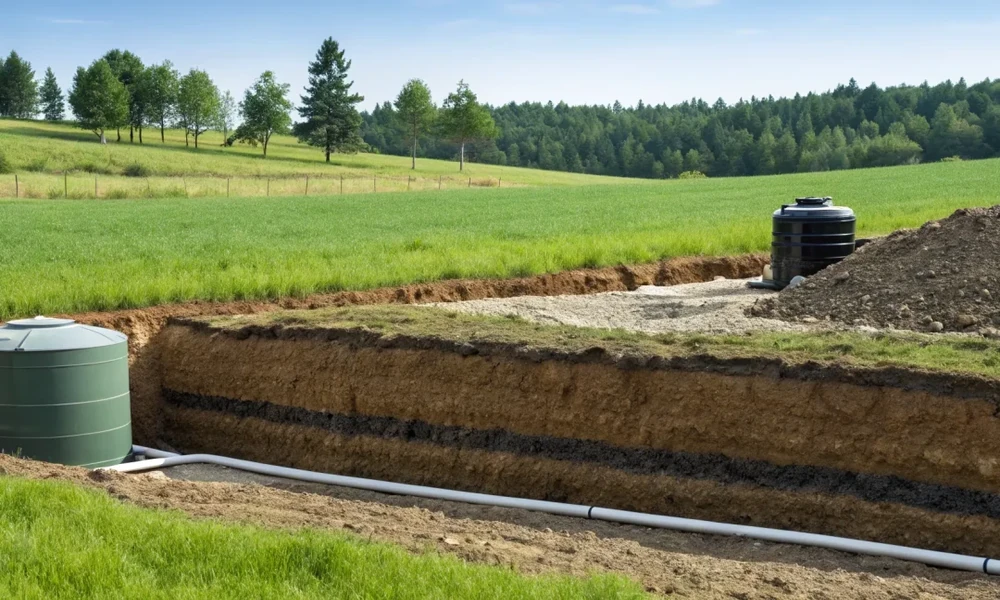

Drive past the last sewer main on the edge of Houston and the rules for handling household wastewater change completely. Homes in the unincorporated parts of the region often treat every flush and shower on their own lot. That job falls to a septic system, which Texas law calls an on site sewage facility. On the dense, slow draining clay common to this part of the Gulf Coast, building one well takes more planning than most new owners expect.
Families buying rural acreage or replacing a failing tank usually discover this during the soil test. Anyone weighing a Harris County septic installation quickly learns that the ground, not the floor plan, decides most of the design. Crews that already dig, pour and level for slab work tend to read that clay with practiced eyes, since the same soil that moves foundations also resists absorbing water.
So it helps to follow the project the way the water will. Start in the dirt, then trace the path from the house to the final patch of yard.
Starting at the Soil Pit
Every new system begins with a site evaluation. A licensed site evaluator, registered sanitarian or professional engineer digs or bores test holes and studies what comes up.
They look at soil texture first. Sandy loam lets water pass at a steady pace. Heavy clay barely lets it move at all. Much of the Houston area sits on clay that swells shut when wet, which limits how much treated water the ground can accept.
Next comes groundwater. Low, flat land near bayous and the San Jacinto River can hold water close to the surface for weeks after a storm. A drainfield that sits in saturated soil cannot treat anything properly.
The evaluator also maps setbacks. Distances from wells, property lines, ditches, the home and easements all trim the space available. On a small lot, that measuring tape can rule out entire system types before anyone prices them.
Matching the System to the Ground
Once the soil report is in, a designer chooses the treatment and disposal method. In this region, the choice usually narrows to a handful of options.
Conventional gravity systems use a buried tank and trenches that let liquid soak into the soil. They are the simplest and cheapest, but they need soil that drains reasonably well and a water table that stays low. On tight clay, they often fail the evaluation outright.
Aerobic treatment units are the most common answer on Gulf Coast clay. Air pumped into a treatment chamber helps bacteria break waste down much further. The cleaned water is disinfected and then sprayed across the lawn through sprinkler heads, usually at night or early morning.
Drip irrigation systems push treated water through small tubing buried just under the surface. They suit sloped, wooded or oddly shaped lots where spray heads would cause problems, though they cost more and need careful filter care.
Low pressure dosing spreads effluent evenly through small perforated pipes using a pump. It can work where soil absorbs water slowly but still has enough depth above the water table.
The state agency that oversees these systems notes that local permitting rules can be stricter than state minimums, which is why the final design always runs through the county.
Following the Pipe From House to Field
Picture the route a single load of laundry water takes on a finished aerobic system.
It leaves the house through a sewer line that must slope steadily toward the tank. Too flat and solids settle in the pipe. Too steep and liquid races ahead of the solids. Installers set grade carefully, which matters on land that barely rises at all.
The first chamber holds back solids. The second chamber adds air for treatment. A third holds the clarified water, where a chlorinator or other disinfection unit treats it before a pump sends it to the spray heads.
Above ground, you will see risers and lids so the tanks can be reached without digging. Below ground, everything needs to sit level and stay put, which is why some installers use concrete pads or anchors where soil is soft or the water table rises during storms. An empty tank in saturated ground can actually float upward.
Power matters too. Aerobic units need a dedicated electrical circuit for the air pump and the effluent pump, plus an alarm that warns when something stops working.
Paperwork Moments That Shape the Timeline
Permits are not a formality here. According to the Texas Commission on Environmental Quality, a permit and approved plan are needed to build, alter, repair or extend a septic system, and local agencies handle most of that review.
In unincorporated parts of the county, the application typically includes drawings and a site evaluation report from a qualified professional. The installer then builds the system to that approved plan.
Before any soil goes back over the tanks and lines, an inspector checks the work. That open trench inspection is the moment errors get caught cheaply. Once covered, fixing a misplaced line means digging again. For a brand new home, passing the septic inspection is also tied to getting permanent electrical service released, so delays ripple through the whole build.
There is one notable exception in state rules. A single family home on ten acres or more may be exempt from permitting if the system still meets design standards and stays at least 100 feet from every property line. Most suburban fringe lots are far smaller, so that exemption rarely applies.
Living With the System Afterward
Installation is only the first chapter. Aerobic systems in Texas come with an initial maintenance contract, and a licensed provider checks the equipment several times a year. They test the aerator, alarm, pumps and disinfection, then report the results.
Homeowners carry part of the load as well. Chlorine tablets need refilling. Spray heads should stay clear of grass clippings and toys. Heavy vehicles belong nowhere near the tanks or the field.
The EPA SepticSmart program offers simple habits that extend system life, such as keeping grease out of the sink and spreading laundry across the week. Tanks also need pumping when sludge builds up, often every three to five years depending on household size and use.
Flooding deserves a final thought. After a major storm, it is wise to limit water use until the ground drains, since a saturated field cannot accept much. If drains gurgle or the alarm sounds, calling the maintenance provider early usually costs far less than waiting until wastewater surfaces in the yard. A system designed around the real soil, inspected before cover up and cared for steadily can serve a rural Gulf Coast home for decades.
Does Flat Clay Ground Change How a Septic System Gets Built?
